
Prediction market development
Launch a Polymarket-style platform under your own brand. Your team publishes questions about future events, participants trade Yes and No shares, and the platform settles positions against rules published before trading opens.
Start with a single event category and a points-based pilot.
01 / PLATFORM FEATURES
The building blocks of a prediction market

Events and market rules
An editor sets the outcomes, closing time and source of truth for each market. Participants can read the exact criteria before placing their first order.

Trading and positions
Traders choose an outcome and see the price, fees and size before they confirm. Their portfolio keeps open orders, holdings and trade history in one place.

Resolution and payouts
An operator or oracle publishes a proposed result and its source. Once the dispute window closes, the platform finalises the outcome and settles balances under the market rules.
02 / A WORKED EXAMPLE
From an open question to a settled trade
Take a market about a software release. Both sides of the trade need to agree on what counts as a release, which time zone applies and whose record will decide the outcome.
Select a stage to follow the trade.
Example market · settled in points
Will version 2.0 ship by 18:00 UTC on 30 June?
03 / END-TO-END DELIVERY
What we build and hand over
A private pilot can run on points with manual resolution. For a public Web3 launch, we also design how trades are collateralised, where liquidity comes from and how funds are protected.
Scope the first release
We agree on the audience, event categories and settlement unit. We prototype three flows: opening a market, making a trade and settling a position. That gives you a concrete scope and estimate.
Build the trading engine
Choose an order book to match buyers and sellers, or an automated market maker (AMM) that quotes against a pool. We implement share balances, fees and cancellations, then test partial fills and thin liquidity.
Equip the operating team
Editors can publish and pause markets, handle disputes, reconcile balances and review an audit trail. For an on-chain deployment, we integrate wallets and the contracts that hold collateral and settle positions.
Test, launch and hand over
We run test markets from the first order to the final payout, including cancelled events and failed data feeds. You receive the source code, tests, deployment instructions and an operator runbook.
04 / CASE STUDIES
Trading and smart contract projects
All case studiesEVADEX shows our work on trading interfaces and wallets. SAWA Launchpad covers oracle integrations and token distribution. These projects illustrate specific components of a prediction market build.
FREEBLOCK / CASE STUDY
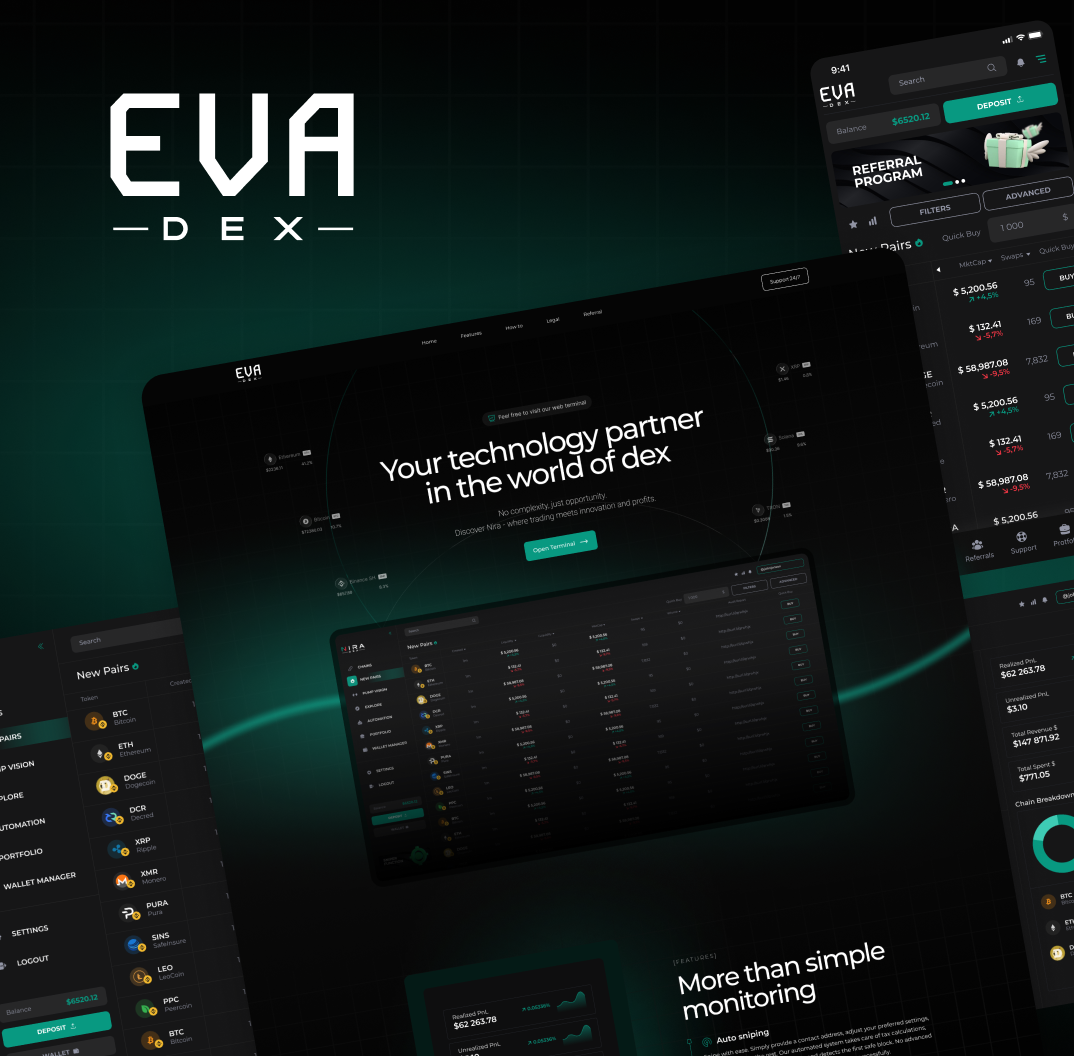
EVADEX
Platform for DEX trading
ChallengeThe client needed a platform for traders that combines DEX market monitoring, discovery of promising tokens, sniper functionality, portfolio analytics, and convenient asset management across multiple blockchains.
What we builtThe following work was completed as part of the project: Product homepage with platform positioning, benefit descriptions, legal section, referral program, and a section with X publications. Dashboard of new trading pairs with a token table, liquidity, market capitalization, volume, creation time, swaps, and a quick Buy action.…
View case study: EVADEX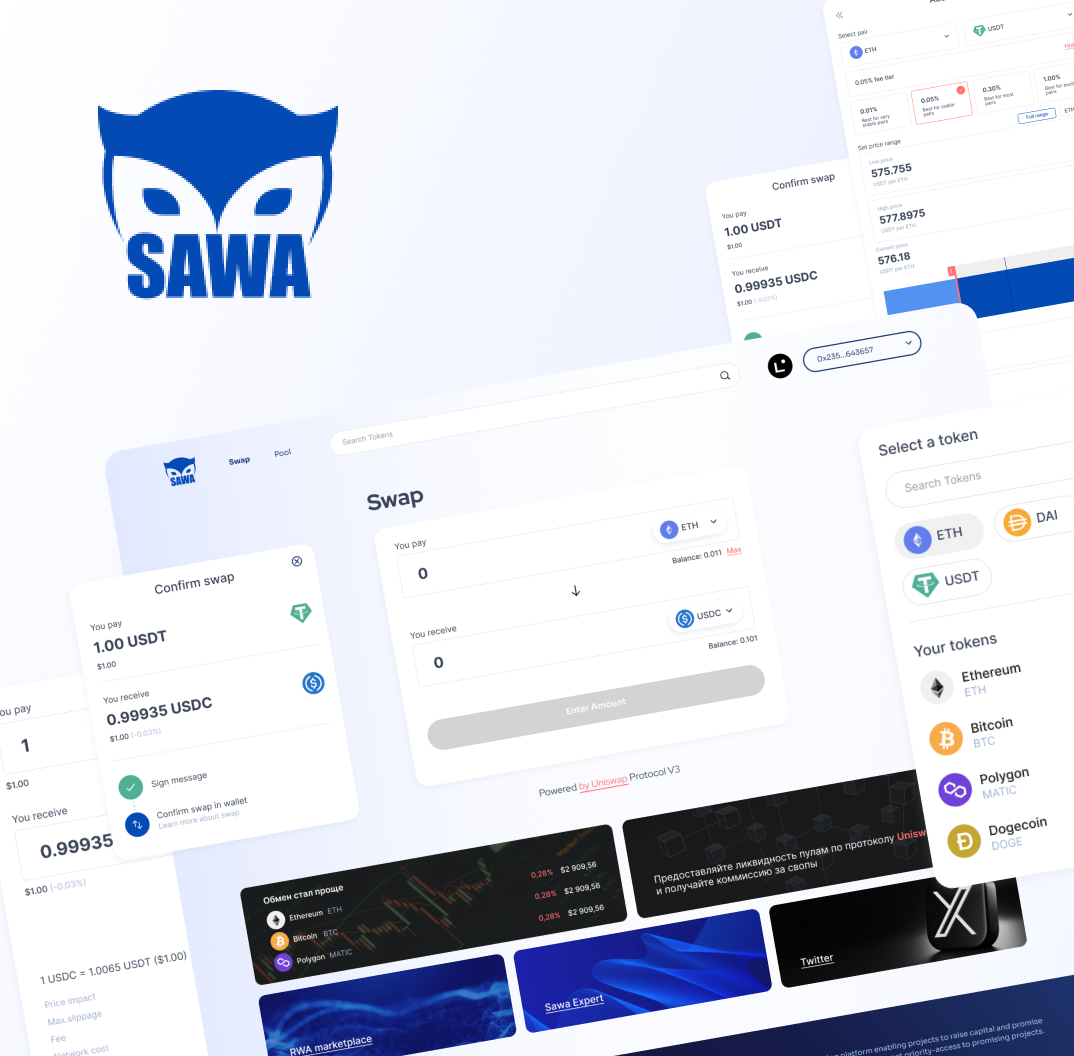
FREEBLOCK / CASE STUDY
SAWA Launchpad
IDO launchpad and DeFi platform
ChallengeDevelop and launch a multifunctional platform for cryptocurrency projects, combining an IDO launchpad, marketplace, staking, farming, publication of informational articles, and a referral program. The platform must provide the ability to sell allocations using its own token and implement referral programs. Integration of the…
What we builtDevelopment of an IDO launchpad for launching projects on various blockchains. Creation of a marketplace for trading allocations and the platform’s own token. Implementation of a staking and farming system for participation in the ecosystem. Integration of a referral program to attract new users. Connection of Chainlink oracles…
View case study: SAWA LaunchpadBEFORE YOU BUILD
Questions and answers
Can you build a Polymarket clone under our own brand?
Yes. We can build the trading mechanics: event discovery, outcome shares, buying and selling, and settlement. The brand, interface and rules will be yours. An independent venue has its own order book or liquidity pool; Polymarket users and orders do not automatically carry over.
Can we validate the idea without using crypto?
Yes. Invite a small group, give them test points and resolve the first few markets manually. You can see whether people understand the rules and whether enough participants take both sides of a trade.
Who decides the result, and what if someone disputes it?
Each market needs a named source, a cutoff time and a dispute process before trading opens. Some events can use verifiable data feeds; others need a moderator who publishes a reasoned decision. We also design a separate path for cancelled events and collateral refunds.
What determines cost and delivery time?
The trading model, number of data sources, custody arrangements and settlement automation drive the estimate. After scoping, we price the MVP by milestone. Pool capital and independent smart contract audits are separate from software development.
What should we decide before accepting real funds?
Work with your legal advisers to define launch territories, permitted event categories and participant eligibility. We can then implement the agreed verification, access controls, limits and audit logs.
DISCUSS YOUR PROJECT
Which market would you launch first?
Tell us about your first event, who will trade and whether you plan to use points or real assets. That is enough to start scoping your MVP.