
FREEBLOCK / DEX DEVELOPMENT
DEX aggregator
development
Bring multiple liquidity sources into one product. We build quote comparison, route selection and swap execution with fees, gas costs and slippage limits in view.
A custom aggregator or an existing API integration, depending on your scope.

01 / PRODUCT CAPABILITIES
Three layers of a DEX aggregator
An aggregator compares offers and coordinates swaps. Its core is working across liquidity sources rather than operating a single exchange.

Quote comparison
Normalize provider responses. Calculate the output after fees and show how long each quote remains valid.
Route selection
Account for trade size, liquidity depth and network constraints. Split routing is scoped as a separate capability.
Controlled execution
Set slippage and deadlines, check token approvals, and track submission, confirmation and failures.
02 / DELIVERY SCOPE
From a quote to a confirmed swap
Start with one network and a few sources when that covers the MVP. Plan additional chains and complex routes separately.
-
Liquidity sources
Select DEXs and APIs, access terms, limits and trading pairs.
-
Quote service
Build adapters, normalization, caching and freshness rules.
-
Routes and interface
Build selection logic, transactions and a swap interface with clear terms.
-
Operations
Add monitoring, failure handling and procedures for onboarding new sources.
03 / ARCHITECTURE
Choose the aggregation model first
- Existing API or custom router
- An existing aggregator API generally needs less implementation work than custom adapters and routing. Choose the level of control your product requires.
- Single-chain or cross-chain
- Cross-chain adds bridge dependencies, different completion times and recovery flows. It needs its own architecture.
- Custom execution contract
- Define whether execution contracts, fee collection and additional checks are needed. Test contract logic separately from APIs.
04 / FREEBLOCK EXPERIENCE
Real projects behind the work
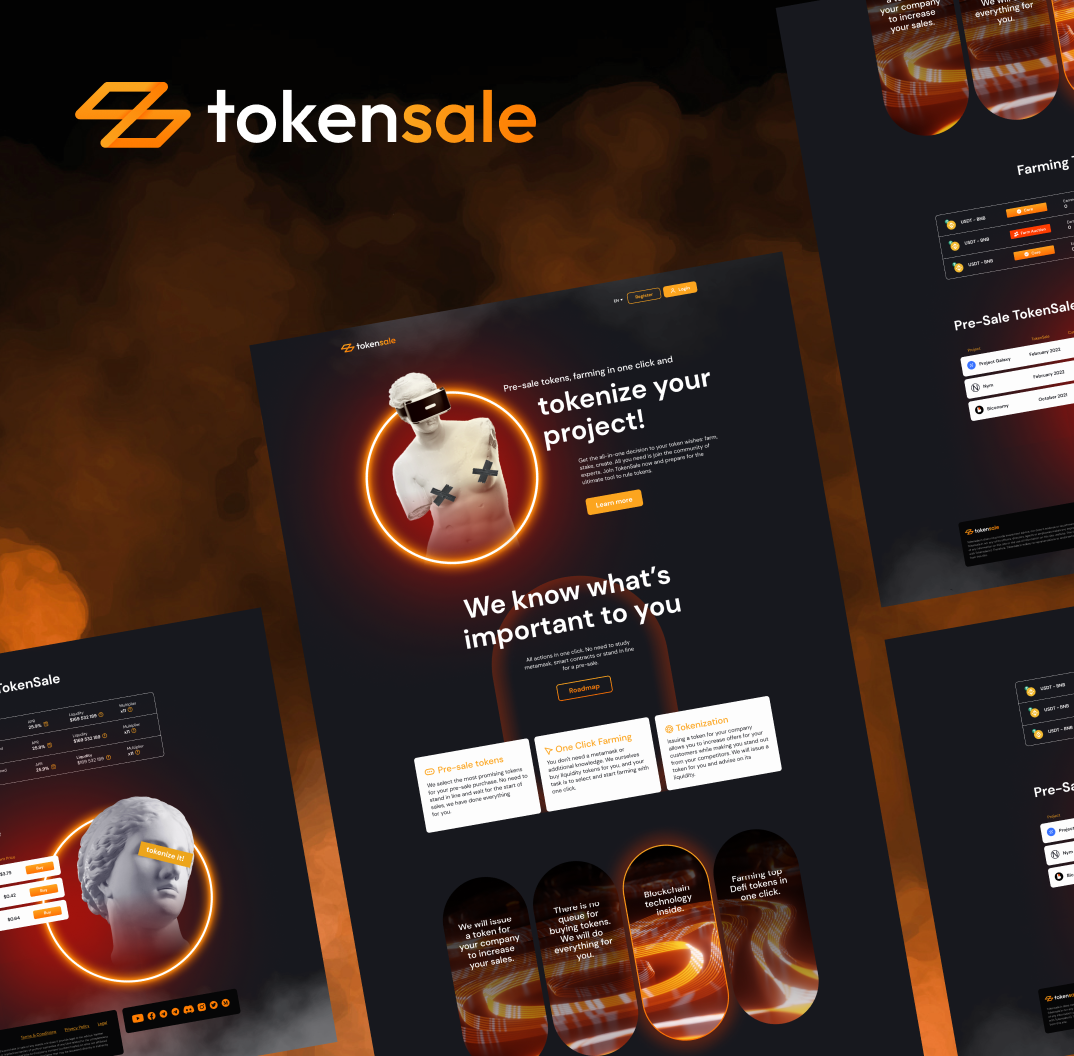
Tokensale demonstrates PancakeSwap and Uniswap integrations in a financial product. This is relevant protocol and interface experience; custom aggregator routing is designed for your selected sources.
FREEBLOCK / CASE STUDY
Tokensale
Web wallet and DeFi platform
ChallengeAn innovative financial ecosystem for digital asset management. A platform representing a unique solution for managing digital assets, including custodial web wallets for secure storage, a platform for project tokenization, and the execution of various token sales.
What we builtTurnkey website development: Creation of the project concept. Implementation of a unique logo. Landing page design to attract users. Layout development of all website pages for high-quality display on various devices. Dashboard design: Development of a dashboard design for convenient management and monitoring of activity on the…
View case study: Tokensale05 / QUALITY AND LAUNCH
Routing must handle failures
A quote does not guarantee execution price. Define acceptable deviations and behavior when market conditions change.
- Quotes account for gas and agreed fees.
- Stale prices and unavailable providers.
- Rounding, decimals and non-standard tokens.
- Rejected signatures, reverted transactions and retries.
06 / COST AND TIMING
An estimate for your scope
First we define the initial release and its dependencies. Then we estimate the delivery phases and identify external costs separately.
Product depth
API integration, custom routing or an execution contract.
Sources and chains
DEXs, adapters, tokens and blockchains.
Load and checks
Quote frequency, monitoring, testing and independent auditing.
07 / TECHNOLOGY
A stack for your product
Tools are selected for your requirements. Logos and links come from our technology catalogue.
Technologies
Blockchains
08 / FAQ
Before we start
How is an aggregator different from a DEX?
A DEX provides exchange mechanisms and liquidity. An aggregator compares sources and selects routes using agreed rules.
Can we start with an existing API?
Yes. This MVP can include an interface, quote integration, transaction construction and error handling.
Can a trade be split between pools?
Yes, when the architecture supports it. This needs allocation logic, gas accounting and full-route execution checks.
Can you support cross-chain swaps?
If needed. We select networks and providers, then define statuses, delays, limits and recovery flows.
How do you estimate cost and timing?
After an initial discussion, we agree on the first release, supported networks and integrations. We estimate delivery by phase and list external costs separately, including infrastructure, third-party services and an independent audit if required.
What do we receive after launch?
You receive source code, documentation and deployment instructions within the agreed scope. Support, monitoring and future releases can be included in a separate delivery plan.
FREEBLOCK / LET’S TALK
Which swaps should your aggregator support?
Describe networks, liquidity sources and operations. Tell us whether you need custom routing or an existing API integration.